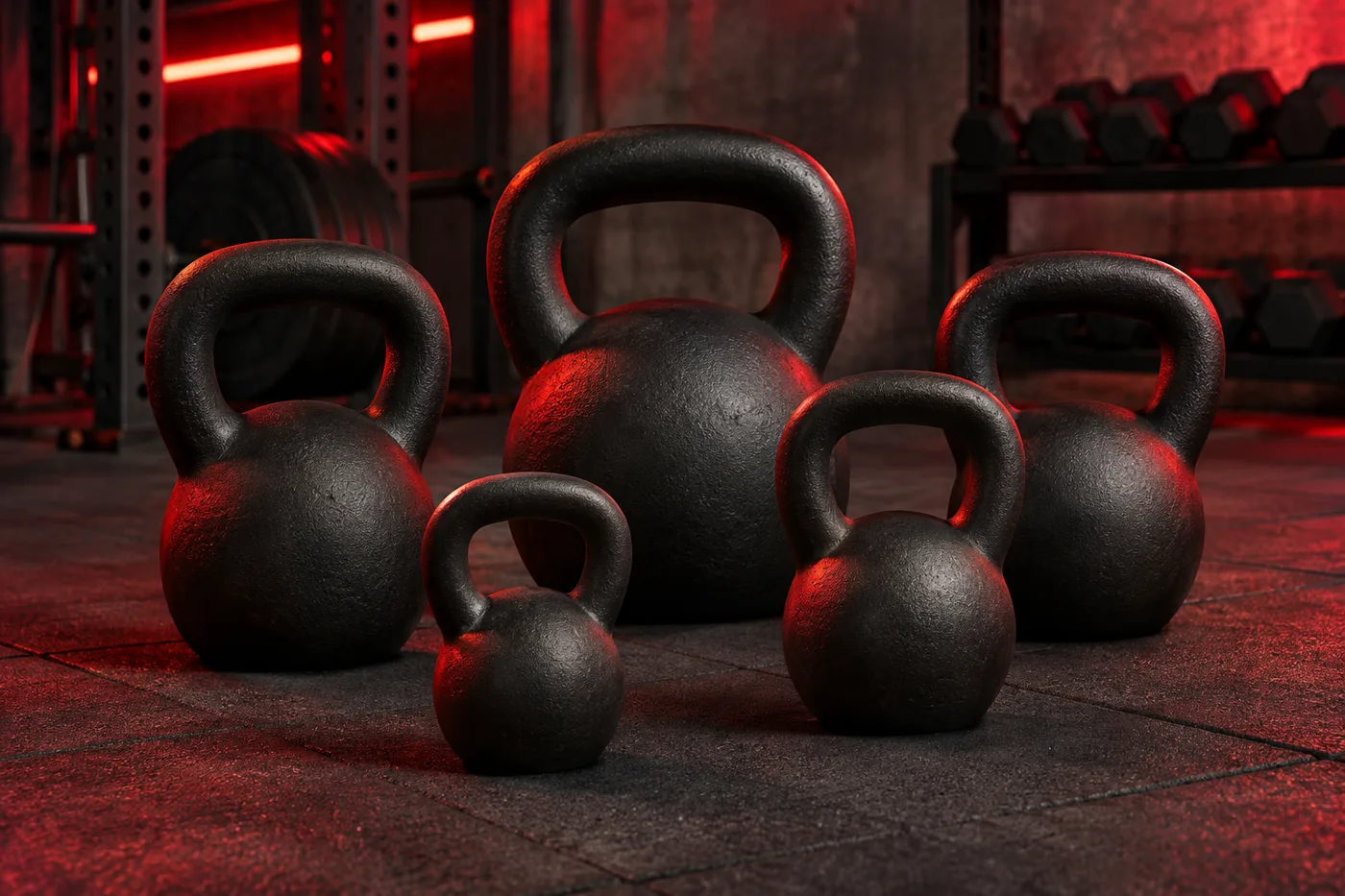
Your first kettlebell should fit the exercises you plan to do, your current strength and the space where you train. A manageable bell can support beginner deadlifts, goblet squats, rows and carries. Use this guide to compare equipment before you buy.
Start with the exercises you plan to do
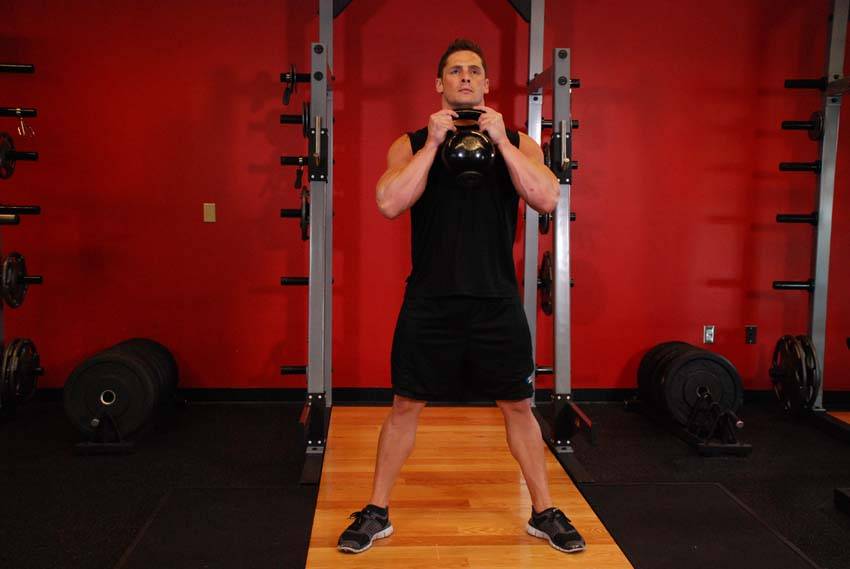
Choose a load you can lift and lower smoothly for the movement you intend to practice. A deadlift and a one-arm row may feel very different with the same bell. Try a light bell in person if possible, and select a weight that allows several comfortable controlled repetitions before tiring.
Buy a lighter bell if you cannot safely hold it close to your chest or keep your balance. There is no universal beginner weight based on age or gender. Our beginner kettlebell workout shows how to practice foundational movements.
Compare kettlebell designs
| Design | Advantages | Considerations |
|---|---|---|
| Fixed cast iron | Simple construction and compact form | Dimensions often vary by load; multiple bells take space |
| Competition style | Consistent shape across weights in many product lines | Larger shell may be less compact than a small cast-iron bell |
| Adjustable | Many loads in one bell; saves storage | Check adjustment system, secure locking, permitted exercises and warranty |
What to check before you buy
- Handle: smooth surface, comfortable grip and adequate clearance for your hands during the exercises you intend to do.
- Base: stable and flat for resting the bell safely. Check finished surfaces for damage or sharp seams.
- Weight range: stated load per bell, available increments and whether a second weight may be useful later.
- Adjustable mechanism: check the manufacturer’s locking instructions and whether dynamic movements are permitted.
- Total cost: include shipping, any accessories, warranty coverage, and the return policy.
Compare value using a simple example
These are hypothetical prices for illustrating the trade-offs. Actual prices and availability change.
| Example | Price | How to compare |
|---|---|---|
| One fixed bell | $45 | One load; sensible if it fits your current exercises. |
| Two fixed bells | $45 + $65 = $110 | Two separate loads; calculate storage and shipping. |
| Adjustable bell | $150 | Compare usable weight increments, adjustment time and warranty. |
Beginner buying checklist
- Choose a comfortable starting resistance and exercises you can practice with control.
- Confirm the handle feels secure, especially in two-handed movements.
- Verify current dimensions, weight and construction with the manufacturer.
- Measure your storage and training space.
- Look up the exact model in the CPSC recall and product safety warning database.
- Confirm return costs and warranty terms before ordering.
What to buy first
Start with a single bell if it suits your planned routine. If you expect to progress across multiple loads and have limited space, compare adjustable options with a pair of fixed bells. Avoid rushing into heavy or explosive exercises until technique is established.
Our equipment review approach
This is a research-based buying guide using general equipment characteristics. Future model-specific comparisons will identify when a product has actually been tested, verify current specifications and disclose qualifying affiliate links. Read our equipment review method and Affiliate Disclosure.
Leave a Reply