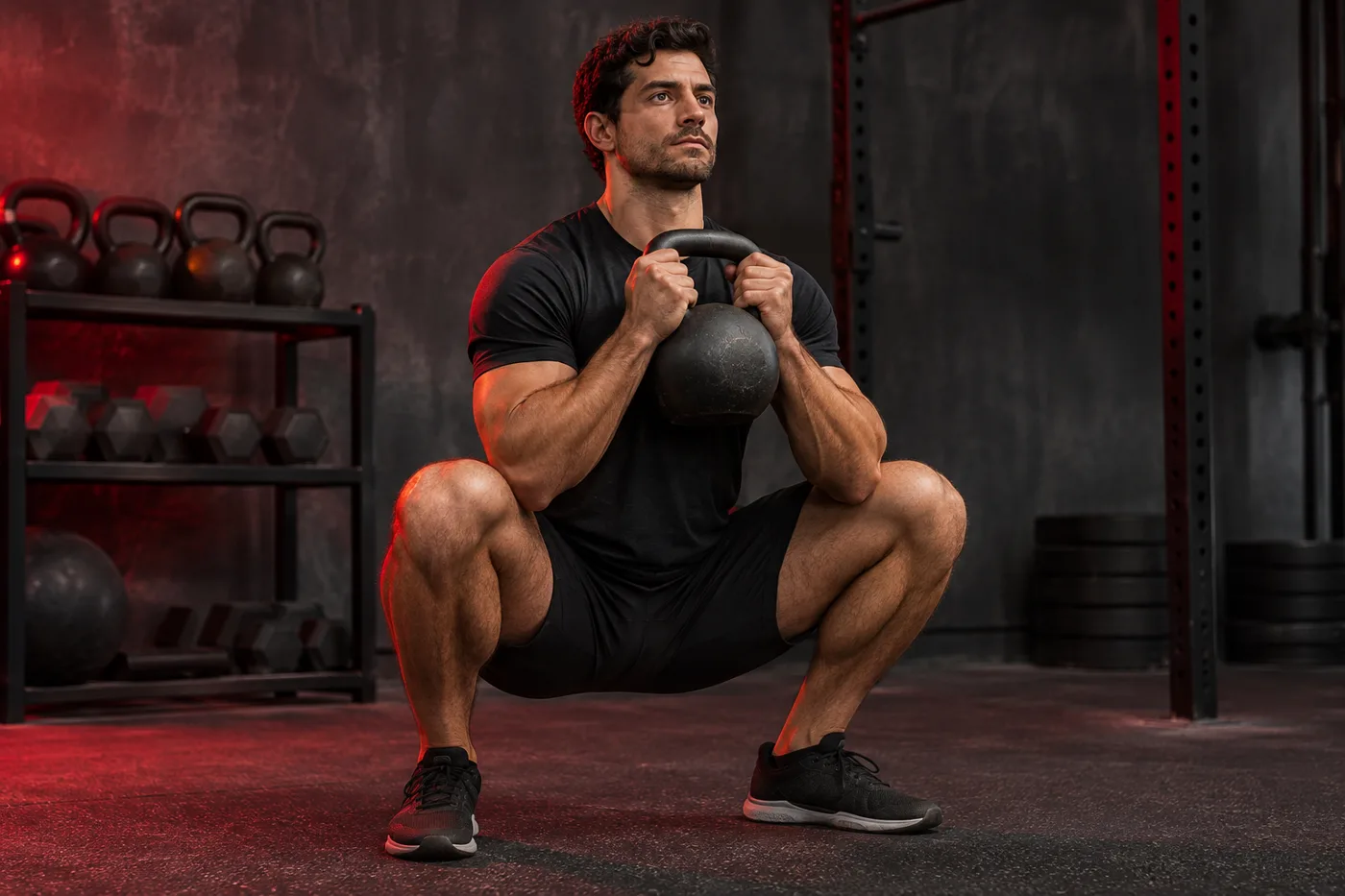
One kettlebell and a little clear floor space can support a practical beginner strength routine. Start with controlled movement, a manageable load and repeatable technique. This session builds familiarity with squatting, hinging, pulling, pushing and carrying without relying on advanced swings.
What you need
- One light kettlebell that you can lift and lower with control. You may need a lighter or heavier bell for individual exercises.
- A sturdy chair or bench for support, a clear training area and a wall for push-ups.
- Two nonconsecutive training days each week to start.
If you’re choosing equipment, read our kettlebell buying guide.
Warm up for five minutes
Walk or march at an easy pace for three to five minutes. Practice a few unloaded hip hinges, chair squats and gentle shoulder movements. Before each weighted exercise, try a few light repetitions to confirm the movement feels comfortable.
The full-body workout
Work through each movement in order. Use one set for your first sessions if you are new to resistance training. Build to two sets as you become comfortable, finishing each set with a few controlled repetitions still possible.
| Exercise | Sets × reps | Rest |
|---|---|---|
| Goblet squat to chair | 1–2 × 6–10 | 60–120 sec |
| Two-hand kettlebell deadlift | 1–2 × 8–10 | 60–120 sec |
| Supported one-arm row | 1–2 × 8 per side | 60–120 sec |
| Wall push-up | 1–2 × 8–12 | 60–120 sec |
| Suitcase carry | 1–2 × 20–30 sec per side | 60–120 sec |
Exercise demonstrations
1. Goblet squat
Hold the bell close to your chest. Bend your knees and hips, lowering toward a sturdy chair until you lightly touch the seat. Push through your feet to stand tall. Choose a comfortable range.
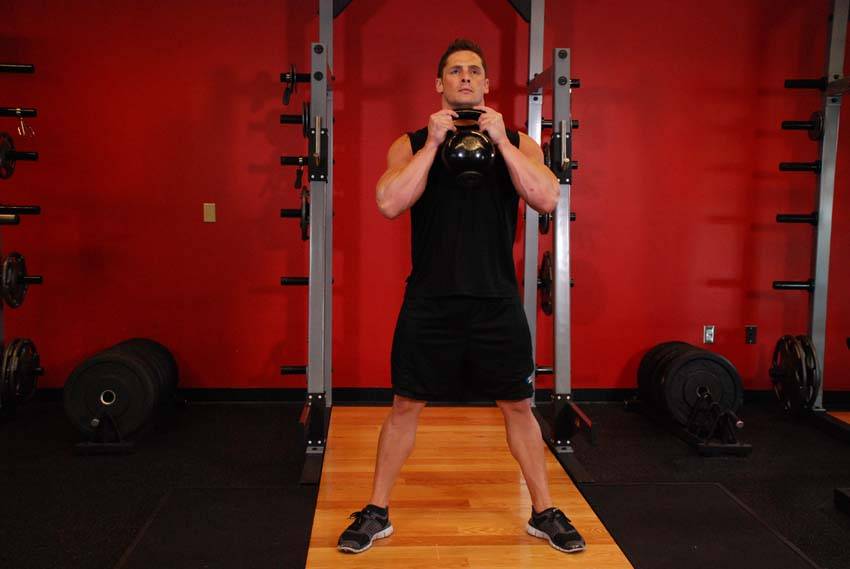
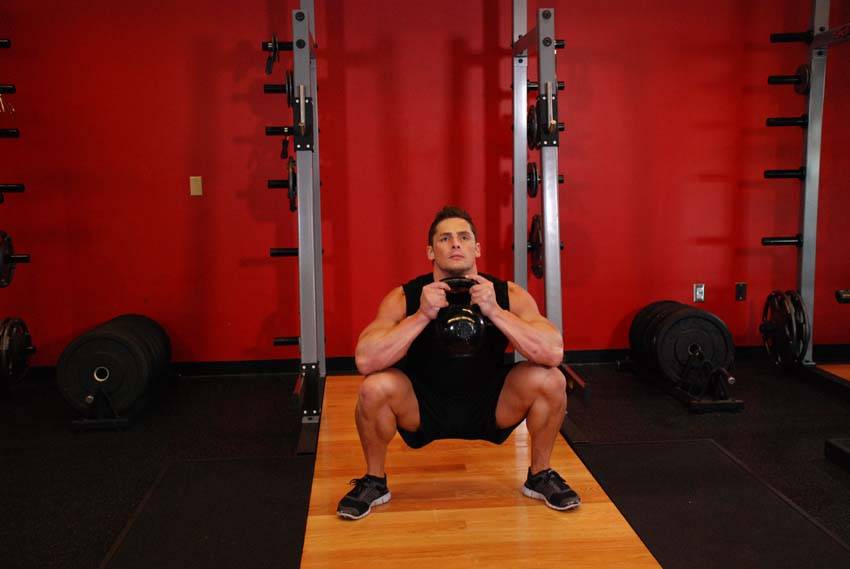
The photos and video demonstrate the free-squat version. For the chair variation, use the chair as a comfortable stopping point.
Watch the kettlebell goblet squat demonstration (National Academy of Sports Medicine).
2. Two-hand kettlebell deadlift
Set the bell between your feet. Hinge at your hips and bend your knees enough to reach the handle with both hands. Brace your trunk, stand tall with control, then reverse the movement to lower the bell. Keep the load close and choose a range that lets you maintain comfortable alignment.
Watch the kettlebell deadlift demonstration (National Academy of Sports Medicine).
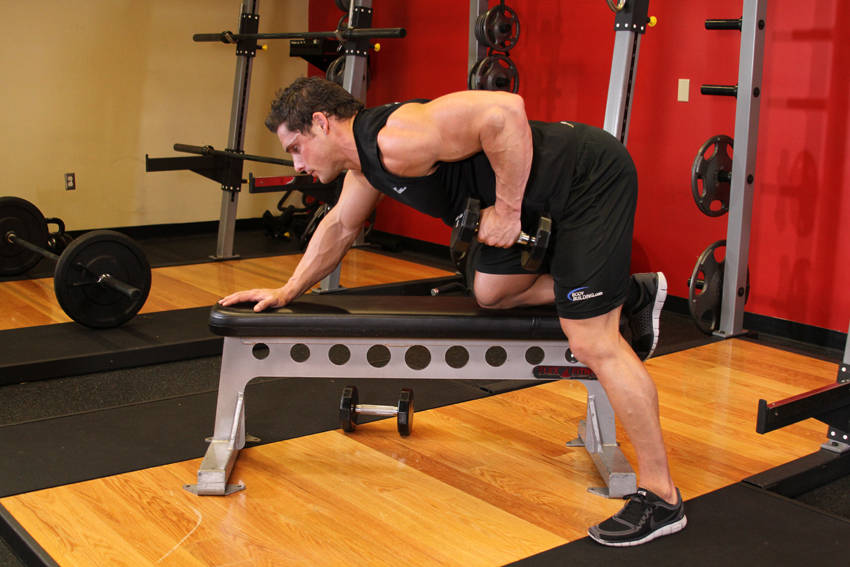
3. Supported one-arm row
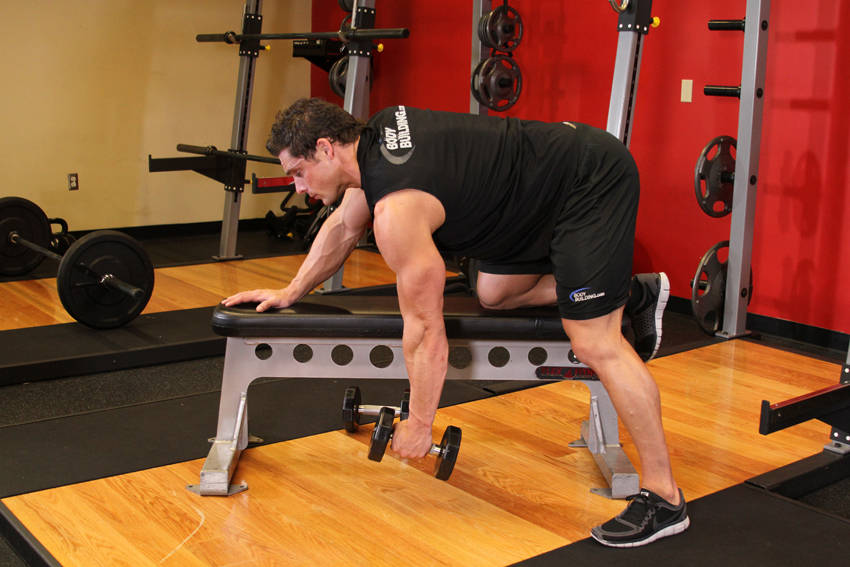
Brace one hand on a sturdy bench. With a light bell in the other hand, draw your elbow toward your hip, then lower it slowly. Keep your torso stable. The following photos show the same supported movement with a dumbbell.
4. Wall push-up
Stand at a comfortable distance from a wall. Place your hands at chest height, bend your elbows and bring your chest toward the wall, then press back. Move closer to the wall if needed.
5. Suitcase carry
Stand tall holding the bell at one side. Walk a few slow, controlled steps in a clear space without leaning toward the bell. Set it down carefully and switch sides. Watch a suitcase carry demonstration.
Four-week beginner progression
| Week | Plan |
|---|---|
| 1 | Two sessions. One set per movement, light load, learn the form. |
| 2 | Two sessions. Add a second set where technique and recovery are steady. |
| 3 | Two sessions. Add a repetition per set within the suggested ranges, when comfortable. |
| 4 | Repeat week 3 or increase to the next manageable load on movements that feel controlled. Return to the lower rep range. |
If a session feels too demanding, repeat a prior week. Rest between sessions and take more rest between sets as needed. Keep a simple log of weight, sets and reps. Do not rush into ballistic swings. A qualified coach can help teach faster lifts.
Common mistakes to avoid
- Starting too heavy or sacrificing range and control to complete a set.
- Rushing reps and turning strength work into a race.
- Using unstable furniture for support or skipping rest days.
Stop if you experience sharp pain, dizziness or loss of control. Adapt exercises to your abilities and obtain individualized advice if an injury or medical condition affects training.
Next steps
Explore more kettlebell exercises and our progressive overload guide.
Sources and photo credits
- ACSM resistance training guidance
- NASM goblet squat technique
- Exercise photos from Free Exercise DB. Featured image is illustrative.
Leave a Reply